
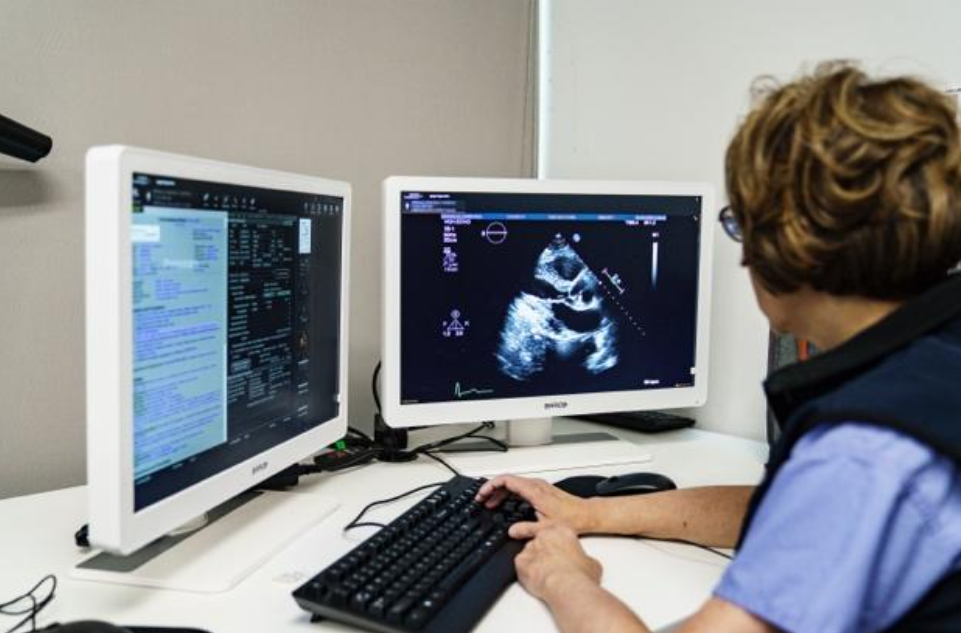
Dr. Teresa Tsang
A new research effort at UBC is reimagining how heart disease is detected and treated across the province, and it starts with meeting patients closer to home.
The MOSAIC study (Multi-Omics and Sonography to Advance Integrated Cardiac Care) was launched with $11.5 million in funding from Genome Canada and Genome BC, part of the Canadian Precision Health Initiative’s ambitious plan to build a 100,000-genome resource for personalized medicine nationwide.
 Led by Dr. Teresa Tsang—Director of the Vancouver General Hospital-UBC Echo Lab, cardiologist, and Professor of Medicine at UBC—the project unites three powerful data streams that are rarely combined at the same time in clinical practice: heart ultrasound imaging, blood-based biomarkers, and genetic information.
“We know that every heart is different, but treatments are often one size fits all,” Dr. Tsang said. “By combining imaging, biomarkers, and genomics using artificial intelligence, we can identify the most optimal tests or treatments for each person, and do it in a way that can be delivered where patients already receive conventional care.”
Closing the Gap Between Genomics and Care
Despite the promise of genetic medicine, BC doctors face significant barriers when it comes to using genomic data for cardiac patients. Testing is often hard to access, clinical systems aren’t designed to handle genome-level information, and many clinicians lack the tools to interpret genetic results in real time.
MOSAIC is designed to bridge that divide. The team is building a secure, AI-powered platform that can analyze imaging, lab results, and genetic variants simultaneously. This allows them to spot early disease, sharpen risk predictions, and uncover patterns traditional testing might miss.
A Province-Wide Effort
Over the next four years, MOSAIC will expand across every health authority in British Columbia, with outreach extending to Yukon. The team emphasizes that broad participation is critical to developing tools that work for everyone, especially patients in rural, remote, diverse, and Indigenous communities who have been historically underrepresented in clinical research.
Participation is straightforward: patients complete a brief online survey, consent to share recent echocardiogram data, and provide one additional blood sample. Researchers then search for early markers of heart disease that standard testing might not yet detect.
One of Dr. Tsang’s patients from Northern BC, and amongst the first to join the study, Mr. Marvin Joseph describes what it takes to reach Vancouver for care, capturing why MOSAIC’s province-wide model is critical.
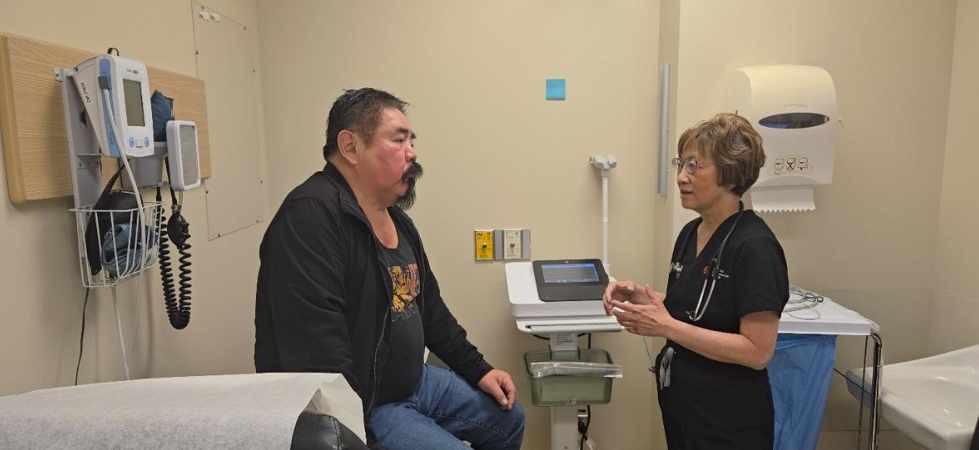
Dr. Teresa Tsang with Mr. Marvin Joseph
“It’s a total fourteen-hour drive” said Mr. Joseph, a reality shared by many patients living outside major centres. He also notes that many people back home face similar symptoms or have already undergone major procedures. “Quite a bit of people at home have the same symptoms as I do, and a lot of them had open heart surgery too, and a study like MOSAIC will help out quite a bit.”
His experience reflects both the burden of distance and the motivation behind the study: to ensure that advanced cardiac care doesn’t depend on a patient’s postal code. Despite the challenges he has faced, Mr. Joseph remains determined to continue his health journey, sharing, “I don’t feel like hanging the gloves up yet.” His resilience—and the resilience of communities like his—underscores exactly why MOSAIC is working to bring equitable, precision heart care to every corner of BC.
What’s Next?
If successful, MOSAIC could give clinicians across BC faster, more accurate diagnostic tools that can be used at the point of care, as well as the ability to intervene earlier with treatments tailored to each patient’s unique biology.
The study is currently recruiting at Vancouver General Hospital and St. Paul’s Hospital, with fourteen additional sites launching across the province over the next year.