

This week, we profile a recent publication in Advanced Science by Dr. Anna Blakney’s lab (pictured) at Michael Smith Laboratories and the School of Biomedical Engineering at UBC. Dr. Blakney holds a Tier 2 Canada Research Chair in Nucleic Acid Bioengineering. Her lab investigates how RNA delivery systems, biomaterials, and the immune system interact, with the aim of designing next-generation RNA vaccines and therapies with improved potency and translational potential.
This study honors Dr. Irafasha (Credo) Casmil, first author of the study and beloved lab member of the Blakney lab. Dr. Casmil tragically passed away in early October 2025. Please read the feature on Dr. Casmil below the publication profile to learn about his incredible scientific career and the lasting impact he left on his community.
Can you provide a brief overview of your lab’s current research focus?
Our lab develops next-generation RNA vaccines and therapies by utilizing both RNA and nanoparticle design.
What are the major findings in this publication?
In this publication, we show for the first time the relative expression kinetics of three different types of RNA: linear messenger RNA, circular RNA, and self-amplifying RNA. We also tested different saRNA designs, and two different types of nanoparticle delivery systems (lipid and polymeric nanoparticles). We show that the different modalities result in drastically different amounts of protein expression, and that while the lipid nanoparticles deliver all the RNA modalities well, the polymeric nanoparticles work uniquely well for self-amplifying RNA.
What kind of impact do you hope your research will have?
We hope that our research will enable future RNA medicines that have a positive impact on human health.
Is the application of your research a primary motivator for you? If not, would you share what is?
Definitely! As a lab, we are excited about translational technology. For us, it’s exciting and motivating to consider that our work may become a medicine that fulfills an unmet need one day.
What are the next steps for this research?
The next steps for this research are to understand why we see disparities in delivery between lipid and polymeric nanoparticles, and to continue to iterate and improve our saRNA designs.
This work was done in collaboration with and funded by Replicate Bioscience, as well as CIHR, NMIN, NSERC, CRC and MSHRBC.
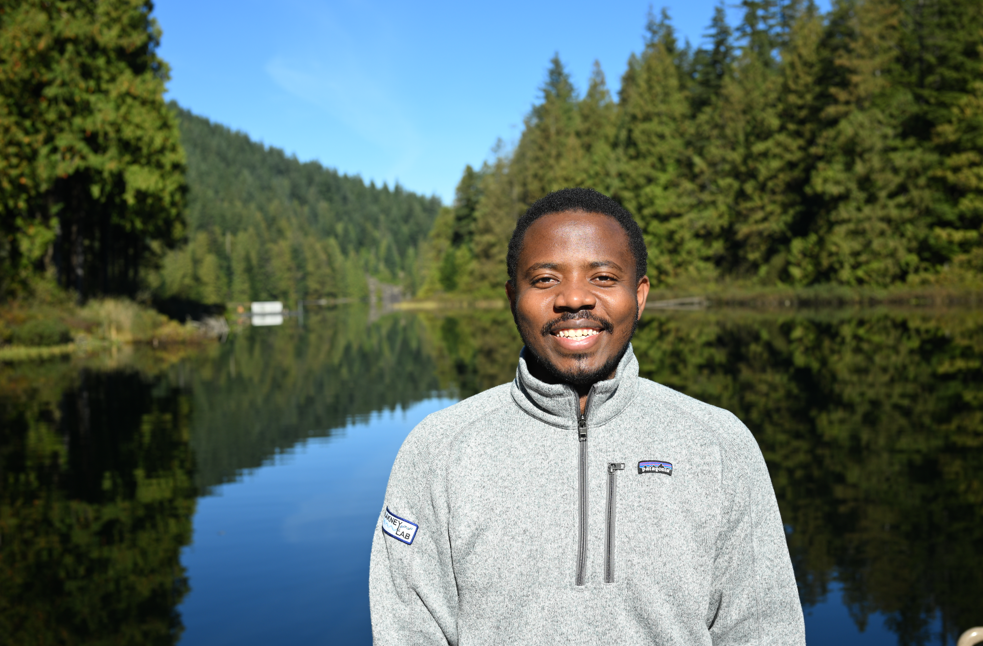
Remembering Dr. Credo Casmil
Irafasha (Credo) Casmil was a brilliant young scientist whose passion, intellect, and compassion left a lasting impression on all who knew him. Born in Ngara, Tanzania, Credo’s journey led him across continents in pursuit of knowledge, discovery, and impact. He completed his B.Sc. in Biochemistry at the University of British Columbia in 2021, laying the foundation for an extraordinary academic career.
As a doctoral candidate in the Genome Science and Technology program at UBC, Credo dedicated his research to the cutting edge of RNA-based medicine. His PhD dissertation, “Expanding the Repertoire of Self-Amplifying RNA Vectors for Next Generation Gene Therapies,” exemplified both his technical brilliance and his visionary commitment to improving human health. His work advanced self-amplifying RNA vaccine platforms, a transformative field with the potential to revolutionize treatments for infectious diseases and beyond.
Credo’s excellence was recognized through numerous awards, including the Canadian Institutes of Health Research (CIHR) Doctoral Award, the Nanomedicine Innovation Network Doctoral Award, and the prestigious William & Dorothy Gilbert Scholarship in Biomedical Sciences. His scholarship was matched by an impressive record of publications in leading journals such as Advanced Science, Molecular Therapy, and Scientific Reports. He also contributed to international conferences, sharing his insights with warmth and clarity that inspired peers and mentors alike.
Beyond his academic achievements, Credo was deeply respected for his kindness, humility, and unwavering dedication to community. He carried himself with grace, always willing to mentor others, and always centering the broader human purpose of his work.