
Authors: Natalia Carranza, Tahereh Bozorgmehr, Dr. Lisa Osborne, and Dr. Carolina Tropini
Laboratory mice have long been central to scientific discovery, underpinning advances in genetics, immunology, and biomedical research. As indispensable models for studying human biology and disease, they have shaped our understanding of health and pathology and contributed to the development of diagnostics and therapies that improve and save lives. Over time, it has become clear that physiology is influenced not only by genetics, but also by the trillions of microorganisms that live in and on the body. These microbial communities, known as the microbiota, and their collective genetic and functional capacity – the microbiome – play a critical role in metabolism, immunity, and disease.
As microbiome research has matured, the focus has shifted from identifying microbial community composition to understanding mechanisms. Researchers now seek to determine whether and how specific microbes directly drive biological changes. Addressing this question requires experimental systems that isolate variables and distinguish causation from correlation under controlled conditions.
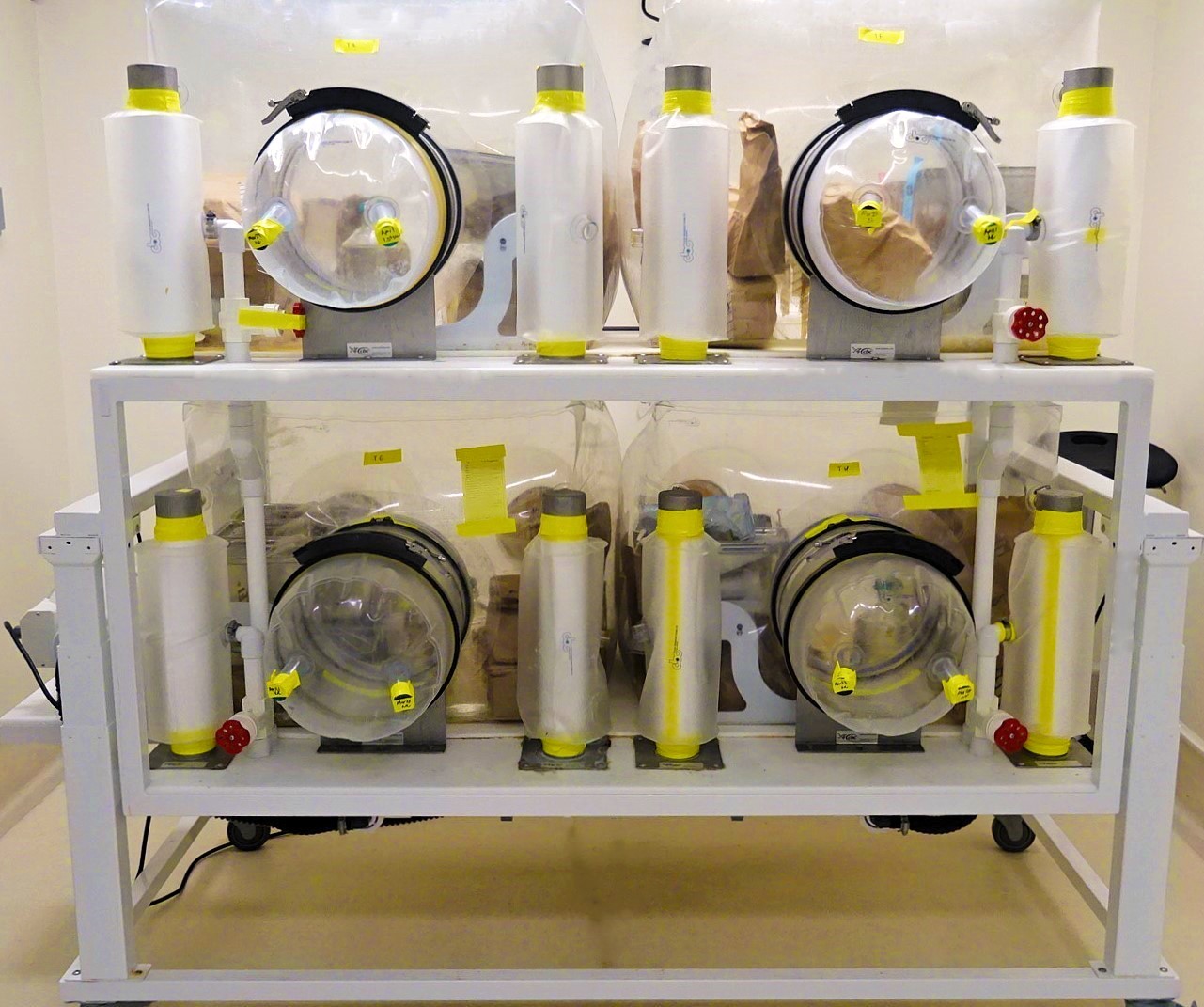
Germ-free mice, raised without detectable microorganisms, and gnotobiotic mice, colonized with defined microbial communities, provide this level of control. By precisely defining microbial exposure, these models enable rigorous investigation of how microbial communities influence host physiology and disease.
After receiving institutional support from the University of British Columbia (UBC) Life Sciences Centre and the Canada Foundation for Innovation, the Gnotobiotic Core (GnotoCore) formally launched in March 2025 to make this form of research accessible. The GnotoCore is equipped with specialized facilities and scientific expertise to support research clients translating complex microbiome questions into controlled in vivo studies. Since its establishment one year ago, the facility has seen a substantial growth in clientele and has been able to support studies from labs with diverse research interests across the life sciences.
A Foundation Built on Collaboration
The creation of the UBC GnotoCore was shaped by years of collaborative research and operational experience in germ-free systems. The facility’s Co-Directors, Drs. Carolina Tropini and Lisa Osborne, whose combined expertise spans more than 25 years, initially established gnotobiotic infrastructure in 2017 to support their own research programs. Numerous studies from Drs. Osborne and Tropini have used germ-free and gnotobiotic animals to examine how the microbiota influences disease outcomes in pre-clinical models of two chronic inflammatory diseases that affect roughly 350,000 Canadians.
 Multiple sclerosis (MS) is an autoimmune disease that damages the nervous system, with detrimental effects on mobility and cognition. In the progressive stage of disease, effective treatment options are extremely limited. Using a recently developed mouse model of progressive MS, Dr. Osborne’s team and collaborators in Dr. Jennifer Gommerman’s lab at the University of Toronto have shown that the microbiome can modify disease outcomes and are now working to identify microbe-derived products that could be leveraged for therapeutic benefit. Dr. Tropini’s group focuses on the role of the microbiome in inflammatory bowel disease (IBD). Gnotobiotic animals were essential to their recent demonstration that an engineered strain of gut bacteria can be used to detect and report on irregularities in intestinal physiology, providing proof-of-principle evidence that engineered microbes may help reduce the number of invasive procedures required for people living with IBD.
Interdisciplinary collaborations that make use of diverse expertise can drive transformative research advancements. Demonstrating this collaborative approach, members of the GnotoCore team recently contributed to a study investigating mechanisms that regulate intestinal epithelial adaptation during pregnancy, showing how coordinated use of animal models can illuminate fundamental aspects of host physiology. The studies enabled by gnotobiotic research at UBC span multiple areas of inquiry, including epithelial biology, synthetic biology, autoimmunity and inflammation, and translational microbiome research.
Building on this foundation, researchers across disciplines are now applying defined microbial models to new biological questions. Recently, Dr. Annie Ciernia and her team at the Djavad Mowafaghian Centre for Brain Health at UBC have used defined microbial models to examine how microbial metabolites influence microglial development and brain function. Reflecting on the impact of the GnotoCore, she notes that access to germ-free and gnotobiotic systems has been central to advancing her research on brain–body communication and the epigenetic programming of microglia.
“The ability to generate high-quality mechanistic data in germ-free models has allowed us to directly link microbial metabolites to microglial maturation and identify pathways through which the gut microbiome influences brain function in both health and disease,” she explains. This work has informed new research directions and collaborations, and her team is now developing an Alzheimer’s disease model incorporating patient-derived samples to investigate how microbiome-associated metabolites influence brain aging and neurodegeneration. These efforts underscore the expanding role of controlled microbial systems in mechanistic studies of complex diseases.
Infrastructure, Expertise, and Services
In its first year, the UBC GnotoCore has continued to enable hypothesis-driven research from experimental design through execution. GnotoCore team members work closely with client investigators to ensure that scientific objectives align with technical feasibility, regulatory requirements, and long-term study design. The GnotoCore provides the infrastructure and expertise to collaboratively design, implement, or fully execute controlled microbial studies from initial concept through completion. Mouse strains are maintained across multiple microbial states, including germ-free, defined consortia, and complex microbiota communities, supported by in-house breeding capabilities. Investigators have access to consultation on study design, specialized procedures, and coordinated support for complex microbiome research programs. Training and collaborative knowledge exchange are central to GnotoCore’s approach.
The GnotoCore is subject to rigorous ethical oversight by the UBC Animal Care Committee, and its practices align with the 3R principles – Replacement, Reduction, and Refinement – championed by the Canadian Council on Animal Care to promote high standards in animal welfare and reproducibility in research.
Looking Ahead
 As the UBC GnotoCore enters its second year, the focus shifts toward expanding partnerships and advancing gnotobiotic research. Building on a strong first year, the Core remains committed to advancing rigorous, reproducible, and ethical science that deepens our understanding of host–microbe interactions and their role in human health. We are grateful to the researchers and trainees who have contributed to this progress and helped shape the development of the facility. Investigators interested in collaborating are encouraged to learn more about the GnotoCore’s services and capabilities at their website or to contact gnotobiotic.core@ubc.ca to discuss study design and feasibility.